
© 2026 Monument Traders Alliance, LLC

In 1900, New York City had a serious problem. Tens of thousands of horses crowded its streets, pulling carriages, delivering goods, and transporting passengers. Each horse produced roughly 15–30 pounds of manure every day, creating mountains of waste, terrible odors, and swarms of disease-carrying flies.
City officials struggled to find a solution. But the answer wasn’t more poop collection carts, it was the automobile, a revolutionary technology that eventually made the entire problem obsolete.
Fast-forward 125 years, and we’re facing another transportation problem. Instead of horse manure, it’s traffic congestion. And once again, an emerging technology could fundamentally change how we get around.
Only this time, the solution might be flying over the problem entirely.
Earlier this week, Archer Aviation (ACHR) announced that its Midnight electric aircraft successfully completed a series of piloted flights around San Francisco Bay.
If you’ve ever driven from Oakland to San Francisco at rush hour, you know the drill. You merge onto the Bay Bridge, hit the brakes, and watch the clock while you inch toward the city. On a bad day, getting to the Marina District can take more than an hour.
Midnight made that trip in about 10 minutes. A straight shot across the water, past the San Francisco skyline.
New York’s horses created a problem that only a new technology could solve. Bay Area traffic is next. And for 10 minutes this week, the solution was hovering right over it.
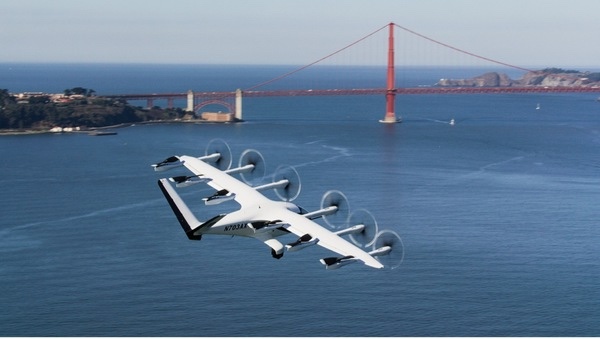 |
Midnight is an electric vertical takeoff and landing aircraft, or eVTOL. Think of it as a cross between a helicopter and an electric car. It takes off vertically, transitions to forward flight, and lands without needing a traditional runway.
During its Northern California demonstrations, Midnight reportedly reached speeds of 131 mph and traveled more than 200 miles across multiple flights. But what impressed me most wasn’t the speed. It was the fact that the aircraft successfully navigated the complicated airspace surrounding three major international airports.
That’s an important milestone because flying cars won’t become a viable business simply by proving they can fly. They must demonstrate that they can operate safely alongside conventional aircraft in America’s busiest cities.
And Archer isn’t alone.
Joby Aviation (JOBY), another industry leader, has been advancing its own electric aircraft. In September, the company announced a coast-to-coast autonomous flight involving its separate autonomous aviation technology.
Imagine combining electric propulsion, vertical takeoff, and artificial intelligence into an aircraft capable of transporting passengers or cargo without a pilot. We’re talking about the convergence of three enormous technological trends: electrification, robotics, and autonomous transportation.
And when disruptive technologies begin working together, the opportunities can become much bigger than anyone initially imagined.
For years, one of the biggest obstacles facing flying cars wasn’t necessarily the technology. It was regulation. Building an aircraft that can fly is one thing, but getting government approval to carry paying passengers over crowded cities is something entirely different.
Fortunately, we’re beginning to see progress.
The Federal Aviation Administration has been expanding real-world testing through its eVTOL Integration Pilot Program. This allows participating manufacturers to demonstrate how electric aircraft could operate within America’s existing aviation system.
It’s a meaningful development because it helps move the industry beyond isolated test flights and closer to commercial operations.
Of course, neither Archer nor Joby has completed the FAA certification process required for routine commercial passenger service. Engineering challenges, infrastructure requirements, and financial hurdles remain. But the pieces of an entirely new transportation ecosystem are beginning to come together.
Archer and Joby are two of the most recognizable publicly traded companies in this emerging industry. Another worth watching is Eve Air Mobility (EVEX), which has the backing of established aircraft manufacturer Embraer (ERJ).
But here’s something I’ve learned from nearly 25 years of investing in disruptive technologies: The companies getting the headlines aren’t always the ones generating the biggest returns.
Think about the automobile revolution. Ford (F) and General Motors (GM) became household names, but enormous fortunes were also created by companies supplying tires, components, engines, and manufacturing equipment. Flying cars could follow a similar path.
Consider Amphenol (APH), a major supplier of advanced electrical connectors used throughout aerospace. Or Honeywell Aerospace (HONA), which develops avionics, flight-control technologies, and other systems relevant to next-generation aviation.
Neither is a pure-play flying-car investment, but both illustrate the broader opportunities that could emerge as electric aviation expands.
We’re still early in this revolution, and today’s eVTOL startups face substantial risks. Some will succeed, while others may never reach commercial production. But that’s exactly why I follow these trends before they become mainstream.
A century ago, New York City didn’t solve its transportation crisis by finding better ways to clean up after horses. It embraced a technology that changed transportation forever.
Today, the next transportation revolution is already taking flight.
How likely are you to take an air taxi the next time you’re faced with bumper-to-bumper traffic? Click here to answer!
