© 2026 Monument Traders Alliance, LLC

If I gave you the following list of headlines six months ago and asked you to predict where the stock market would be today, what would you have said?
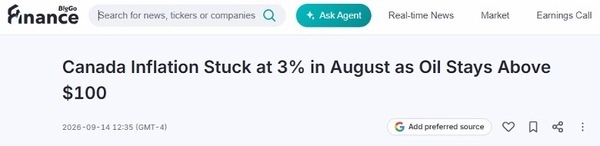
Oil above $100 a barrel. Inflation still running well above the Federal Reserve’s 2% target.
 |
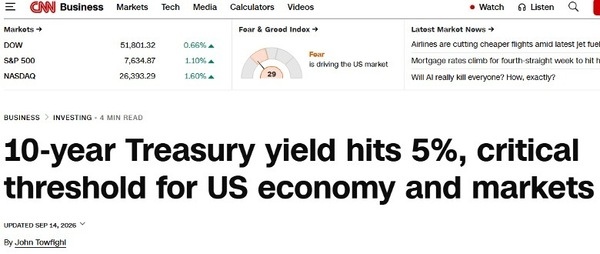
The 10-year Treasury yield hitting its highest level since 2007.
 |
The Fed raising interest rates and signaling that more hikes could be coming.
And some of the world’s leading artificial intelligence researchers warning about catastrophic risks from AI and calling for development of the most advanced models to slow down.
Now add one more.
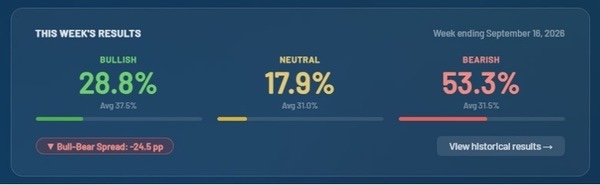
According to the latest AAII Investor Sentiment Survey, 53.3% of individual investors are bearish, up from just 39.3% a week ago and far above the historical average of 31.5%. Bullish sentiment, meanwhile, has fallen to just 28.8%.
 |
With that combination, you’d probably expect the stock market to be getting crushed.
Instead, the S&P 500 is sitting just a little more than 2% below its all-time high.
That might be the most important market story nobody is talking about.
Let’s start with Wednesday’s Fed meeting.
As expected, the Federal Reserve raised interest rates by 25 basis points, bringing the federal funds target range to 3.75%–4.00%.
It was the first hike in three years. More importantly, the message coming out of the meeting was considerably more hawkish than investors had grown accustomed to.
And as I wrote earlier this week, I don’t believe the Fed should’ve raised rates.
My reasoning hasn’t changed. Much of the recent inflation pressure is coming from higher energy prices. Raising interest rates doesn’t produce another barrel of oil or repair energy infrastructure damaged by the conflict in the Middle East. It does make mortgages, auto loans, business loans, and virtually every other form of credit more expensive.
The Fed obviously sees the inflation risks differently. Its latest projections put 2026 PCE inflation at 3.7%, while 16 of 18 policymakers now expect at least one more rate increase this year.
And Wall Street thinks there’s a decent possibility the Fed won’t stop there.
Current market pricing puts roughly equal odds on one additional 25-basis-point hike or two more hikes before the end of the year, with only a small probability that Wednesday’s move was the last one.
That’s a dramatic change in the interest-rate outlook.
Now step back from the Fed and look at everything else investors are dealing with.
As I stated above, oil remains above $100 following the escalation in the Middle East, the 10-year Treasury yield has climbed to levels not seen since 2007, inflation remains stubbornly high, and investor sentiment has turned extremely bearish.
Then there’s AI.
Earlier this week, we discussed the sudden wave of warnings from some of the biggest names in AI. We’ve heard calls to slow development of frontier models and even estimates putting the probability of AI eventually causing human extinction at around 10%.
Whether you believe those forecasts or think they’re wildly exaggerated, they have injected another major source of uncertainty into what’s been the most important investment trend of the last several years.
Put it all together and this should be a terrible environment for stocks.
Except it isn’t.
This is where I think investors sometimes make a mistake.
We spend so much time deciding what the market should be doing that we forget to watch what it is doing.
Think about the setup today, and we still have the S&P 500 barely more than 2% below its record high.
That’s impressive.
It doesn’t mean stocks can’t fall another 5% or 10%. They absolutely can. With yields this high and uncertainty elevated, I expect volatility to stick around.
But there’s an old Wall Street saying that bull markets climb a wall of worry.
Right now, that wall is starting to look like Mount Everest.
I’ve been saying for some time that I believe we’re closer to 1995 than 1999 in this innovation cycle.
Nothing I’m seeing today has changed that view.
Corporate earnings remain strong. AI infrastructure continues to be built. Robots continue moving into factories. Nuclear power is experiencing a renaissance. Breakthroughs continue across biotechnology, genomics, quantum computing, and other areas of innovation.
Those are the things that will ultimately determine where stocks are headed over the next several years… not one Fed meeting, one scary AI headline, or one week’s investor sentiment survey.
I’ve been investing for more than 25 years, and some of the best opportunities I’ve ever seen have appeared when the headlines looked terrible, investors were scared and great companies were being sold along with everything else.
We’re starting to see some of that today.
And with the S&P 500 still barely more than 2% from its all-time high despite everything being thrown at it, I’m paying attention to what the market is telling me.
So far, it isn’t saying the bull market is over.
P.S. Look at that sentiment number one more time: 53.3% bearish, up from 39.3% a week ago, against a 31.5% historical average. That’s not a normal reading, that’s the kind of extreme I’ve learned to lean into rather than run from, because it’s usually right around where the best setups start showing up before the headlines catch on.
The hard part is that sentiment tells you the fear is there, it doesn’t tell you which stocks are actually gearing up for a rally. That’s the gap Bryan Bottarelli built his Flash Rally scanner to close.
He broke down the full system earlier this week, watch the replay right here.
If that wall of worry really is starting to look like Everest, I’d rather have a way to see who’s actually climbing it.
