

Earnings season has gotten off to a strong start.
There’s not much to complain about when you look at the broad numbers.
So far, 88% of the S&P 500 companies that have reported earnings came in above expectations… and 85% exceeded revenue estimates.
The blended year-over-year earnings growth rate for the index now stands at 24.7%. If that holds through the season, it will mark the second consecutive quarter with earnings growth above 20%.
Earnings guidance from companies has also been relatively balanced. Four S&P 500 companies have lowered earnings expectations while five have raised them.
But that’s still a small sample size. More than 40% of the S&P 500 reports over the next two weeks, giving us a much clearer picture of corporate America. (I’ll continue tracking those trends as they develop.)
Despite these strong results, the market has moved in the opposite direction.
Since earnings season began, the Nasdaq 100 has fallen nearly 5%, while the S&P 500 has slipped roughly 2%.
That tells us investors are focused on something other than earnings.
The Market’s Achilles Heel
Investors have been walking on eggshells through the market like they’re recovering from a pickleball related Achilles surgery (IYKYK).
The reason is the hottest four-letter abbreviation on Wall Street today… CAPEX. Yes, I know it’s five letters, but I’m a finance guy, not an English major.
Investors are becoming more and more sensitive to companies dramatically increasing spending on AI infrastructure.
Last night’s earnings were a perfect example.
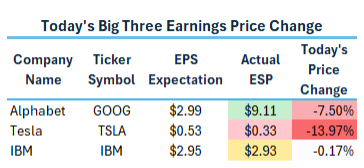
The headlines tell the story.
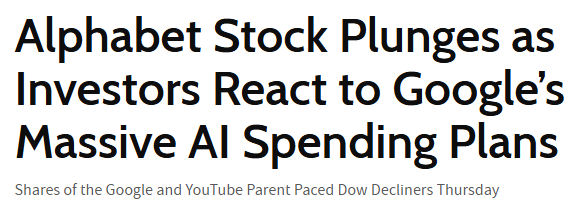
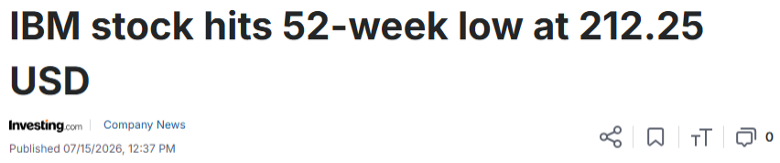

The common theme isn’t weak demand. It’s higher spending.
Investors are asking a simple question…
Well, today, NVIDIA (NVDA) CEO Jensen Huang addressed this concern directly: “Every single industry will be CAPEX heavier, but the result will be incredible growth.”
I agree with him.
These companies are smashing the gas pedal to the floor and yelling “Ramming Speed!!!” like D-Day from Animal House, and that’s what has investors running away as fast as possible from the hyperscaler stocks.

The AI buildout is real. The long-term opportunity is enormous. But Wall Street is focused on the next few quarters, not the next five years.
Remember the Metaverse?
Many investors still remember Meta’s push into the metaverse. The company ultimately spent roughly $80 billion before investors could clearly see the payoff. During that period, Meta shares lost more than 75%.
Today’s AI spending is fundamentally different, but the psychology is similar.
Investors see margins being pressured today in exchange for profits that may not materialize for several years.
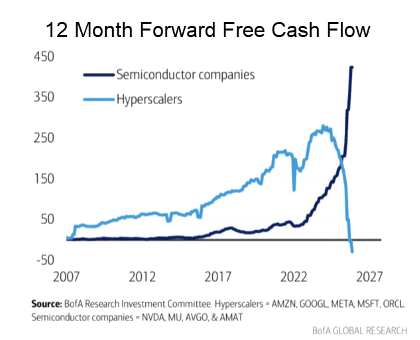
This scares the hell out of investors… but it also creates an opportunity.
Follow the Money
Rather than buying the companies making the largest capital investments, I’d rather own the businesses benefiting from that spending without carrying the same CAPEX burden.
Labcorp (LH) fits the profile.
The healthcare sector has quietly become one of the stronger areas of the market as institutional investors rotate toward more defensive industries. That trend often accelerates during periods of elevated market volatility.
Fundamentally, Labcorp has quietly rebuilt its business following its restructuring earlier this decade.
Revenue growth has averaged roughly 7% annually while management has continued providing constructive guidance. It’s not a high-growth AI company, but it is a consistent compounder.
Over the longer term, Labcorp should also benefit from AI adoption across healthcare and diagnostics without having to spend tens of billions of dollars building AI infrastructure itself.
The technical picture is equally attractive.
The stock recently completed a bullish Golden Cross, where the 50-day moving average crosses above the 200-day moving average.
Historically, that signals strengthening long-term momentum.
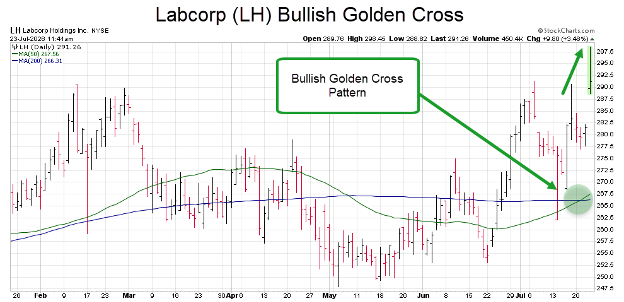
That stands in sharp contrast to much of the technology sector. More than half of the Nasdaq 100 currently trades below its 50-day moving average, while Labcorp is making new highs.
Today’s move was fueled by the announcement that the company had been awarded a $364.7 million Defense Health Agency contract, pushing shares to another all-time high.
Labcorp reports earnings next week. Expectations remain relatively modest because it isn’t viewed as an AI stock, but I believe investors continue to underestimate how companies like Labcorp will benefit from AI’s expansion into healthcare over the coming years.
How I’m Trading It
I like buying the stock at current levels.
For investors looking to use options, I also like the February 19, 2027 $320 call. My intermediate price objective is $350-$360 over the next six months.
The option currently trades with a wide bid/ask spread, so I’d avoid using a market order.
Instead, use a limit order near theoretical value. Based on current Black-Scholes pricing, the theoretical value is approximately $15.46 per contract.
This aspect of the broader AI story is just a small piece. It continues to expand rapidly.
I sat down with Matt McCall yesterday to discuss that and the wide range of technologies that could define the next decade of investing.
Watch our discussion right here.
Here’s a hint: Tomorrow’s winners are unlikely to be the ones everyone’s talking about today.
